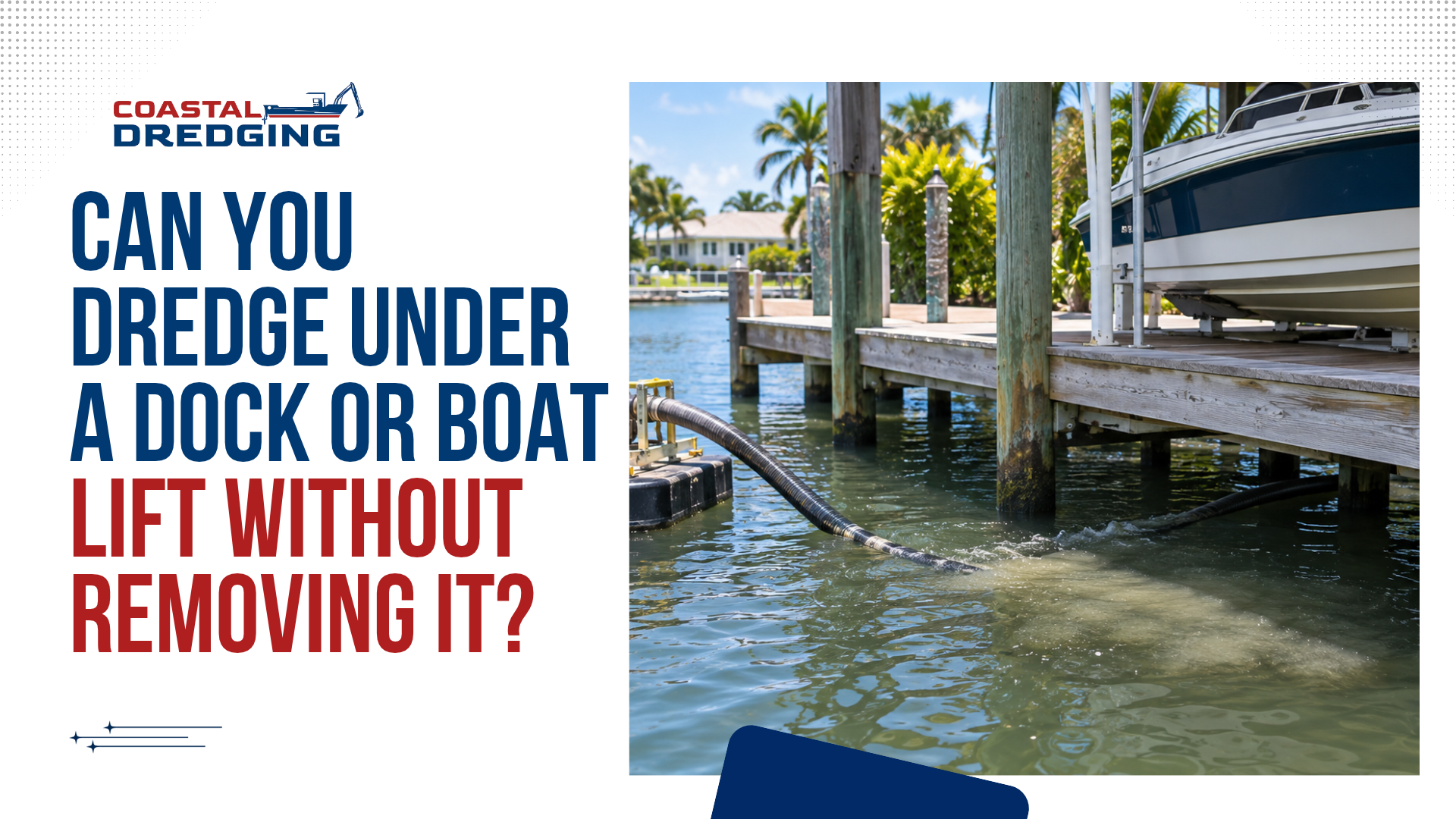
Yes, we clear sediment from under a dock or boat lift without removing it and it remains in place. Its effectiveness depends on the dredging technique, the design of the dock, and how much clearance is available.
Sediment builds up under docks and boat lifts, and soon the water becomes too shallow for use. Many waterfront property owners, you may wonder, does the entire structure need to be removed first? At Coastal Dredging, we often get this question from our clients, and the answer is, dredging under a dock can be done without removing it.
Why Sediment Builds Up Under Docks and Boat Lifts
Water circulates slowly around docks, pilings, and lifts. Pilings and decking disrupt the flow, causing the water to slow down. Over time it loses its ability to carry sand and silt, which then settles on the bottom. Tides, storms, boat movement, and runoff keep adding more sediment.
Because the accumulation occurs gradually, it’s often overlooked. Most boat owners only notice when their boat begins to touch the bottom, gets stuck during low tide, or the lift can’t lower completely. By that time, a lot of usable depth beneath the dock may have significantly reduced. So getting in and out of the slip becomes a guessing game.
Can Dredging Be Done Around an Existing Dock or Lift?
Dredging beneath a dock doesn’t require removing the dock or taking away the lift. Raising or repositioning a lift temporarily is not the same as removing it. The lift stays installed and goes back into use once the work is done.
Every waterfront is different. The dock layout, the distance between pilings, and the kind of lift all influence the approach, making some locations easier to manage than others. The best way to understand what can be done on your property is to contact Coastal Dredging, for a quick start on the process.
What Affects Whether the Dock or Lift Has to Come Out
A few site conditions usually shape the answer:
- Piling spacing and access: Close piling arrangements limit the crew’s working space, while more open designs may provide easier access. Access from both the water and the shore is also a factor.
- Lift type and clearance: Most piling-mounted lifts stay in place. We’ll be at its highest position so we can work underneath it. Floating lifts can sometimes be repositioned if needed.
- Dock height over the water: A higher dock allows for more space below it. In contrast, a low-profile dock offers less room, making the tasks more complicated.
- How much sediment has built up: A light layer involves a different task compared to years of buildup. The amount and location of the material help shape the plan.
Coastal Dredging uses the most advanced technology which helps identify the suitable plan according to the need, which can be Dock dredging or Boat lift dredging.
How Dredging Works in Tight Spaces
Working in and around docks requires more than just standard equipment. Limited spaces require unique tools and experienced workers. At Coastal Dredging, we work with the most advanced equipment, innovative techniques and highly trained crews to handle projects in areas with limited space.
Instead of applying a generic method to your property, the team tailors the work to fit your dock’s design, the placement of the pilings, and the lift’s position. This planning phase is crucial, as a thorough assessment helps understand the site details before starting any work.
Protecting Docks, Pilings, and Lifts During the Job
Your dock and lift are a real investment, and protecting them matters on any dredging project. The crew plans the work around existing structures, carefully monitors the area around the pilings, and remains mindful of the dock and lift’s condition throughout the entire process.
Signs It’s Time for Dredging Under Dock or Lift
Don’t wait until you’re stuck. Watch for these common signs that sediment has built up:
- Your boat drags bottom: If the hull or propeller hits the bottom while entering or exiting, it means depth has been reduced.
- You get stuck at low tide: A slip that used to work at every tide may now only work at high water.
- Your lift can’t lower the boat fully: Sediment under the lift can block it from reaching its maximum range.
- You have less usable depth than before: If you have to wait for high tide just to move your boat, sediment buildup is likely the cause.
Noticing these signs early makes it easier to plan the work before the slip becomes unusable, call (561) 408-4683 today to get the right help for your dock.
What to Expect After Dredging
Once the work is done, you will have usable depth restored and safer access to your boat. Getting in and out of the slip will no longer be a matter of guesswork, and your lift will be able to operate effectively again. This means you’ll spend less time checking the tide chart and more time on the water.
Dredging projects often require permits, at Coastal Dredging we can help get the right permit, contact us to get more information.
FAQs
Does the lift need to be removed first?
No. Docks and boat lifts stay in place. Access, clearance and equipment affect how we dredge, not whether your lift has to be removed.
Can dredging be done around pilings?
Yes. Piling spacing and access affect how the work is planned, and crews with specialized equipment can work in tight areas around them.
Does this apply to HOA or community docks?
Yes. Sediment builds up under shared docks just as it does under private ones, and HOA and community dock projects can be assessed the same way.
Next Step: Get an Assessment
Not sure if your dock or boat lift has enough water depth for safe operation? Coastal Dredging provides dock and boat lift dredging services for waterfront homeowners, marina operators, and HOA communities in Palm Beach and Broward Counties. Contact us now for a free site assessment and find out what dredging around your boat would require.