
When a boat slip becomes shallow, most owners focus on restoring enough depth to use it. But it is also important to consider where the removed sediment will go. Dredged waste material must be tested, moved, and placed in a location that meets applicable rules, and the best option varies by site.
This guide explains common ways to manage dredged waste, how dewatering fits into the process, and when sediment may be reused.
What Counts as Dredging Waste?
Dredging waste includes sediment, sand, silt, and other material evacuated from the bottom of a dock, boat slip, marina, or waterway. Government agencies often call this material “dredged material,” and the term is important. For example, clean sand can still be valuable after removal.
According to the U.S. Environmental Protection Agency (EPA), the sediment dredged each year from U.S. ports, harbors, and waterways goes to open water, confined disposal facilities, or upland sites. The agency also says most of it could be used beneficially for nourishment of beaches with clean sand or development of wetland habitats.
The process for a dock or slip owner is simple:
- Sediment accumulates
- The water becomes too shallow
- Boats start hitting the bottom or getting stuck at low tide
- Clearing the sediment brings back usable depth and safe access
Removal is only one part of the job. The material still has to be taken somewhere.
Before deciding where dredged waste goes, the sediment is usually evaluated. EPA and U.S. Army Corps of Engineers (USACE) federal guidance provides a framework for selecting placement options, and testing is a major part of it.
Evaluators often focus on:
- Physical traits: including grain size and how easily the material can be dredged
- Chemical traits: Sediment can carry metals or other contaminants
- Biological effects: When the material is proposed for open-water disposal
- Site history: including nearby activity that may have affected the sediment
Testing needs vary by project, location, and local requirements. Clean sand is not the same as fine silt that has settled over many years.
Common Options for Dredging Waste
EPA lists management options that are all site-specific.
- Open water placement: Material is deposited at an approved site in open water or the ocean. A site’s approval does not automatically authorize its use. It must meet the testing requirements.
- Confined disposal facilities (CDFs): Sediment is put in a restricted area, usually on land, where it is physically contained. This approach is often used for material that cannot be disposed of in open water.
- Contained aquatic disposal: Material is deposited in an underwater pit or bermed site, then covered with a clean layer. It is commonly used when land is limited.
- Upland or landfill placement: The dredging waste is transported to a land-based site. This option is often used for smaller projects.
- Beneficial use: The material is used productively instead of being disposed of.
What Is Dewatering?
Dredged waste is often mixed with a lot of water, especially when it is pumped. Dewatering separates water from solids so they can be managed, stored, or hauled.
The USACE explains that dewatering allows excess water to drain from a placement area. This helps the material settle and creates space for future work. Depending on the site, dewatering dredging waste may involve:
- Settling basins or containment areas: Where solids settle, and water flows out through controlled outlets.
- Geotextile tubes: Large fabric containers that retain solids while allowing water to drain through.
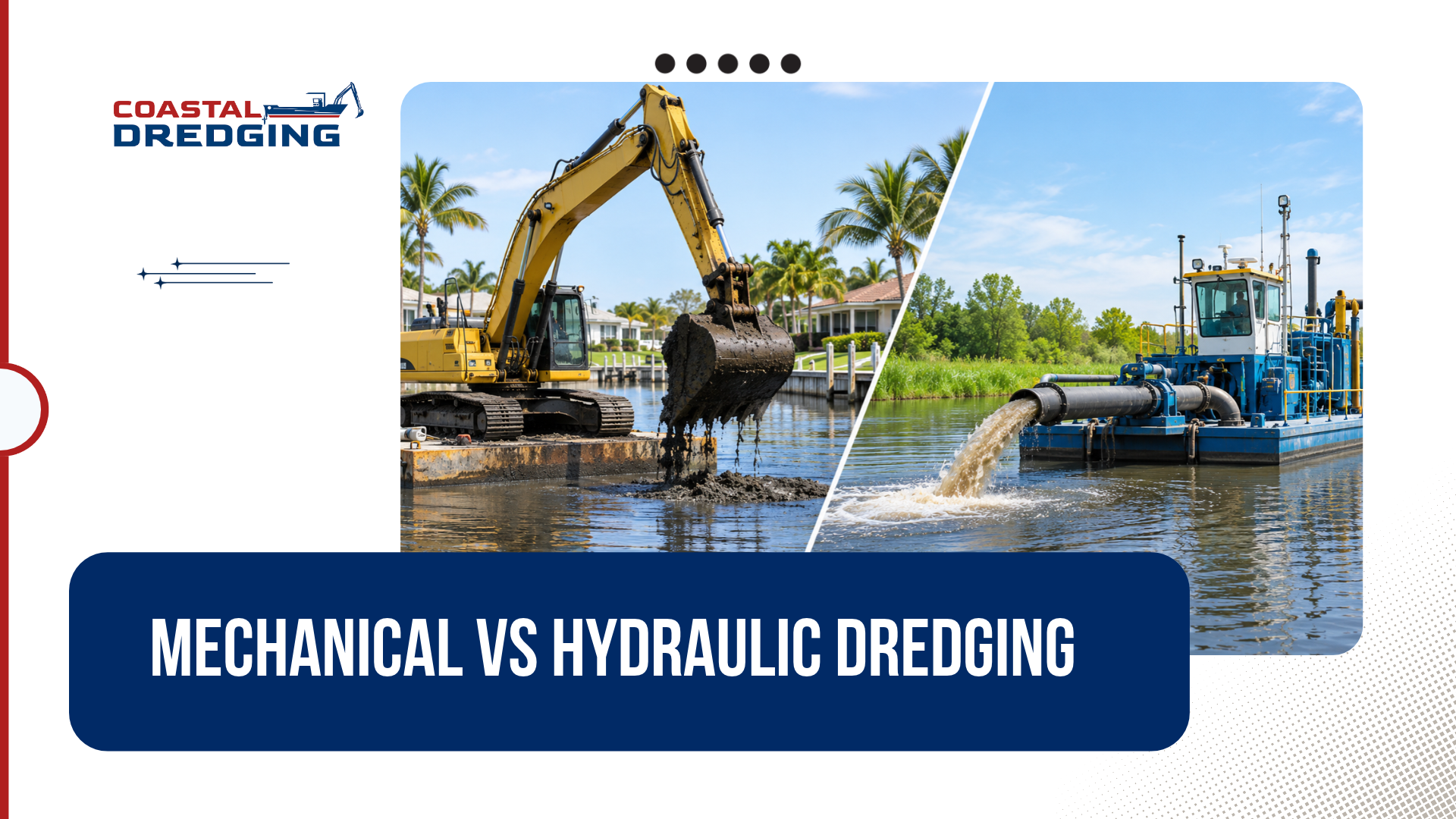
- Mechanical equipment: Heavy-duty machines used to rapidly squeeze or spin water out of muddy dredging slurry,
Each method has its pros and cons. Geotextile tubes require plenty of open space and proper drainage because standing water around them can slow the process. Discharge water from dewatering must meet applicable limits. The need for dewatering and the method used depend on site conditions, equipment, and local requirements. At Coastal Dredging, we elevate your site and choose the best option for the job.
Beneficial Use: Putting Sediment to Work
The EPA describes beneficial use as using dredged material for a productive purpose. In its training materials, it calls beneficial use the preferred management option where it fits.
Examples include:
- Habitat development, including wetland restoration
- Beach nourishment using clean sand
- Fill or construction materials
- Landfill cover
- Brownfield and mine-site reclamation
It is not always possible. EPA materials outline common limits:
- The sediment must be suitable, both physically and chemically
- Projects are decided on a case-by-case basis and often require a local sponsor
- Cost and logistics can get in the way
- Additional regulatory requirements may apply
So it’s worth asking about beneficial use, and the answer depends on the test results and what’s available nearby. Contact us today, and we will plan the best disposal method.
Florida Considerations
Waterfront owners in Palm Beach and Broward Counties must comply with Florida rules and federal guidelines. F. Florida Administrative Code Rule 62-330.411 specifies that, under one general permit, dredged material must be removed and placed at a self-contained upland disposal site, except in cases listed in the rule. A separate state general permit applies to return water from contained upland disposal areas.
The Florida Inland Navigation District has planned upland management areas and beach placement for material dredged from the Intracoastal Waterway. The EPA has also highlighted the limited capacity for upland disposal near Port Everglades.
Requirements vary by project and permit type.
What Decides Where Dredging Waste Goes
The factors that usually shape the plan are:
- Sediment type and test results
- The amount of waste being removed
- Access to the area, especially in tight spaces
- Distance to an approved placement site
- Permit conditions
- The equipment used to remove the sediment
What This Means for Dock and Boat Slip Owners
Most waterfront owners, HOA communities, and marina operators focus on a few practical questions: Can the work take place around my dock? Where will the material go? What do I need to approve?
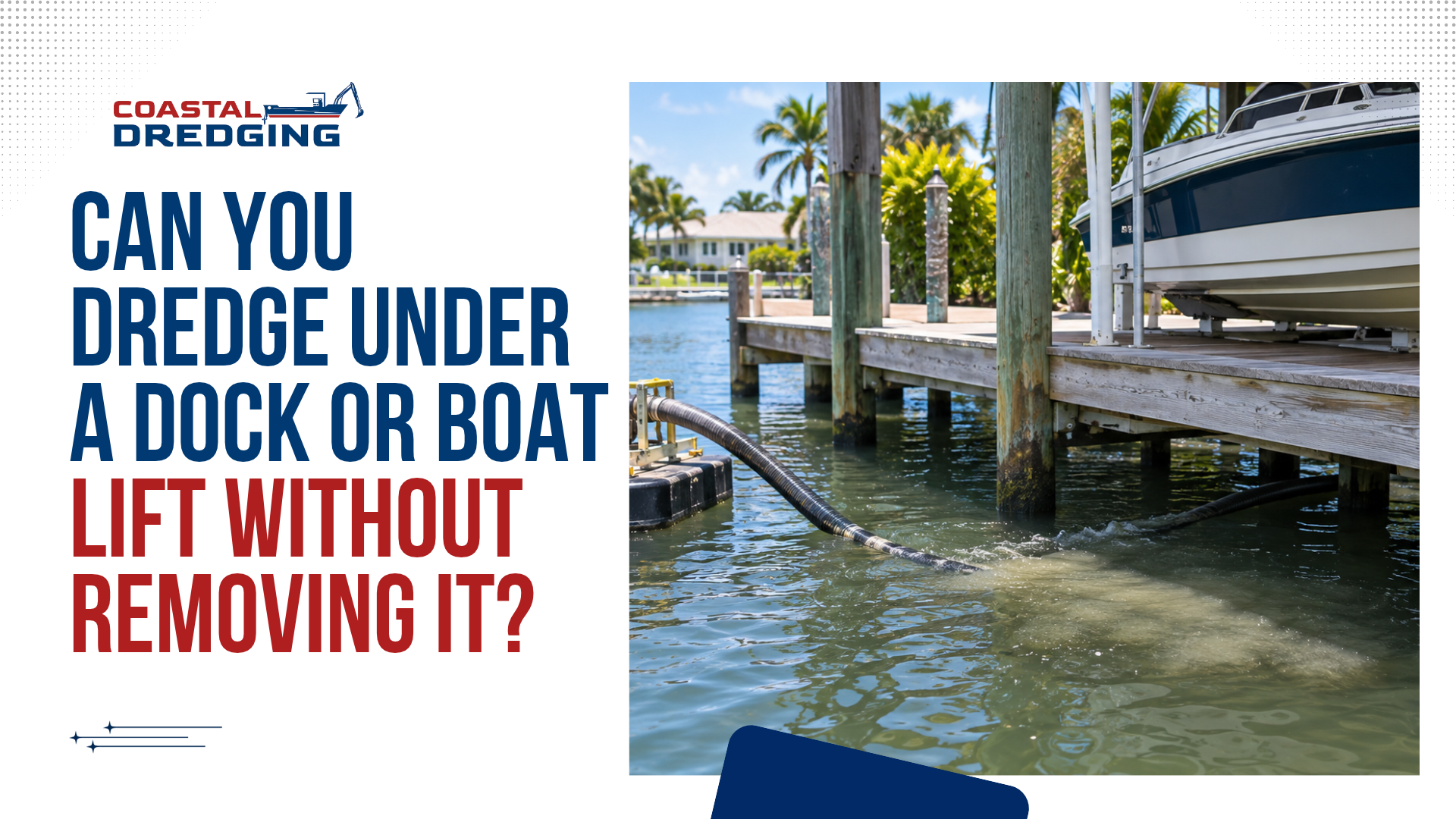
Coastal Dredging focuses on removing sediment to restore usable depth. For projects in confined spaces, we use custom-built equipment and skilled crews. Docks and boat lifts can remain in place. Site access, clearance, and equipment determine how dredging is completed, not whether your dock must be removed.
On permits, Coastal Dredging will guide you through the options and refer you to trusted permitting companies.
Get an Assessment
If your slip is shallow, you are dragging bottom, or you get stuck at low tide, a site assessment is the best first step. Coastal Dredging serves waterfront homeowners, marina operators, and HOA communities in Palm Beach and Broward Counties. Contact us to talk through what restoring usable depth at your property would involve.
Frequently Asked Questions
Is dredging waste hazardous?
No. It depends on what the sediment contains, which is why testing comes first.
Can dredged sediment be reused?
Sometimes. Clean sand and suitable material may qualify for beneficial use, but it depends on the site and the rules.
Does every project need dewatering?
No. Whether you need dewatering depends on how the material is removed, where it goes, and local requirements.
Reference links:
- https://www.epa.gov/cwa-404/beneficial-use-dredged-material-under-cwa-section-404
- https://epa.gov/sites/default/files/2015-08/documents/role_of_the_federal_standard_in_the_beneficial_use_of_dredged_material.pdf
- https://origin-awswest-www.epa.gov/sites/default/files/2015-09/documents/dredgingwebinarmodule1.pdf
- https://19january2025snapshot.epa.gov/sciencematters/finding-beneficial-uses-sediment-dredged-waterways/index.html
- https://www.army.mil/article/111154/USACE_Galveston_District_awards__1_1_million_contract_for_placement_area_DAMP/
- https://webarchive.library.unt.edu/web/20130216224944/http:/publications.usace.army.mil/publications/eng-manuals/EM_1110-2-5027/c-7.pdf
- https://www.law.cornell.edu/regulations/florida/Fla-Admin-Code-Ann-R-62-330-411
- https://state-rules.com/florida/fac/62-331.218
- https://regulations.justia.com/regulations/fedreg/2021/07/22/2021-15529.html
- https://webgen1files1.revize.com/floridainlandnavdistfl/Documents/Counties/St%20Lucie/St.Lucie_DMMP_Final%202024.pdf